How a hospital modernizes its IT infrastructure
with refurbished hardware
Case Study: Saxon Hospital Großschweidnitz
In this case study, together with Saxon Hospital Großschweidnitz, we show how a modern IT infrastructure can be successfully implemented even under economic constraints. The focus: rising operating costs, high availability requirements, and the question of how both can be aligned sustainably.
The following overview summarizes the key project data – from the initial situation and the chosen solution to the technologies used.
| Customer: | Saxon Hospital Großschweidnitz |
| Industry: | Healthcare / Public Institution |
| Location: | Großschweidnitz, Germany |
| Size: | More than 500 beds, large IT infrastructure |
| Challenge: | Rising operating costs with a limited budget |
| Solution: | Dell servers (refurbished) for a Proxmox cluster |
| Products: | Dell servers | Cisco & HPE transceivers | Patch cables |
Mission accomplished – and budget left for expansion
The project exceeds expectations: 66% savings, a stable Proxmox cluster, and an unexpected opportunity:
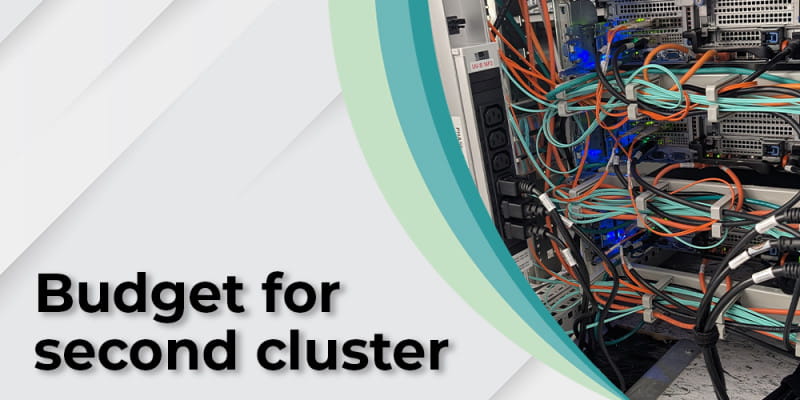
“We are staying under budget and delivering a solution that works flawlessly,” reports Mr. Titz from the IT department. “And because we are saving so much, we can now build a second system – at our other site here on the campus. That was not planned at all originally.”
The savings make it possible: The first project is successful and simultaneously finances the expansion of the IT infrastructure at the second location. The service also proves its value under real conditions. When one of the servers turns out to be defective, the replacement is quick and straightforward. “There are providers who spend weeks trying to fix such a problem. That consumes resources and time,” says Mr. Hennersdorf. “IT-Planet says: replace it. Done. That’s exactly how it should work.”
Prevention instead of reaction: the availability strategy
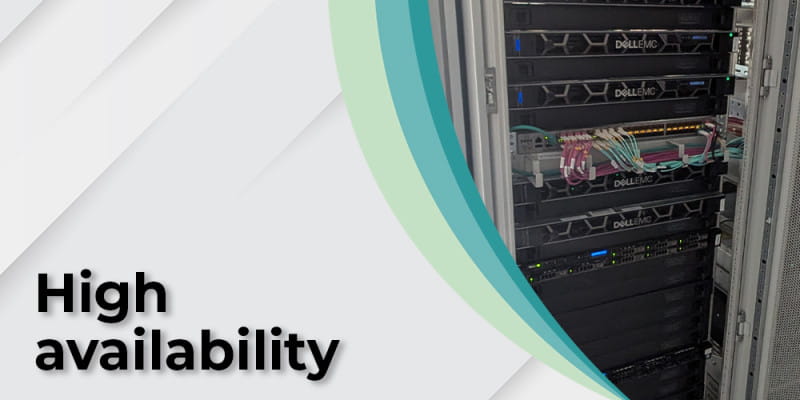
Every minute counts in a hospital. If a critical system fails, no one can wait until the next morning. “If a system fails at two in the morning, hospital operations continue – but with disruptions,” explains Mr. Hennersdorf. “We need a solution that works immediately. Not in four hours, not the next day. Immediately.”
The solution is in the rack: spare devices, ready to use. “Load the config, swap the hardware, done,” describes Mr. Hennersdorf. “Half an hour to an hour, and everything is running again. For our requirements as a hospital, this is exactly the right approach.”
The key advantage? With refurbished hardware, this strategy becomes economically viable. “Keeping a new €10,000 switch just as backup would not be feasible for our budget,” explains Mr. Hennersdorf. “With refurbished hardware, we can afford two or three spare devices and still stay within budget.”
The result: higher availability, faster recovery at manageable costs. A strategy that works perfectly for this specific use case.
Efficiency is also a matter of responsibility
The hospital views its work from a broader perspective: social responsibility. “We manage funds from health insurance providers – ultimately from contributors,” explains Mr. Hennersdorf. “It’s not just about us as an institution, but about responsible use of resources.”
That’s why it is important for the team to show that professional IT solutions do not have to be unaffordable. “This approach works. That’s why we want to encourage others to follow similar paths,” says Mr. Hennersdorf. “Even with limited resources, good solutions can be found. You just have to be creative.” His analogy sums it up perfectly: you don’t always need to buy the latest model. A proven, reliable solution will get you to your destination just as safely.
What comes next
The first cluster is only the beginning. The savings make more possible than expected. A second Proxmox cluster will be built at the other location later this year – financed from the budget that remained from the first project.
In the medium term, full migration will follow. “We will continue to run the existing environment in parallel for another one to two years,” explains Mr. Titz. “But the path is clear: step by step towards the new solution.”
A key factor in this process is the long-standing partnership with IT-Planet. Mr. Richter, sales expert at IT-Planet, has supported the hospital for years and knows its specific requirements in detail. “This personal support and understanding of our needs as a hospital make the difference,” emphasizes Mr. Hennersdorf.
Modern IT infrastructure with a limited budget
Rising operating costs. An IT project that needs to be implemented. And a budget that is limited. Saxon Hospital Großschweidnitz faced the challenge of expanding its IT infrastructure economically and without compromising on quality. The existing virtualization environment needed to be renewed, but the costs of continuing the previous solution had increased significantly.
“We were faced with the question: Do we now spend significantly more money for the same performance? Or do we look for alternatives?”, says Mr. Hennersdorf from the IT department. For a hospital that manages public health insurance funds, responsible use of resources is not optional, but mandatory. “When you manage public funds, you have to think economically,” explains Mr. Hennersdorf. “This is money from everyone, and we have to work cost-effectively.”
The requirements are anything but trivial: The team needs a fully redundant cluster that meets the high availability requirements of hospital IT while staying within the limited budget.
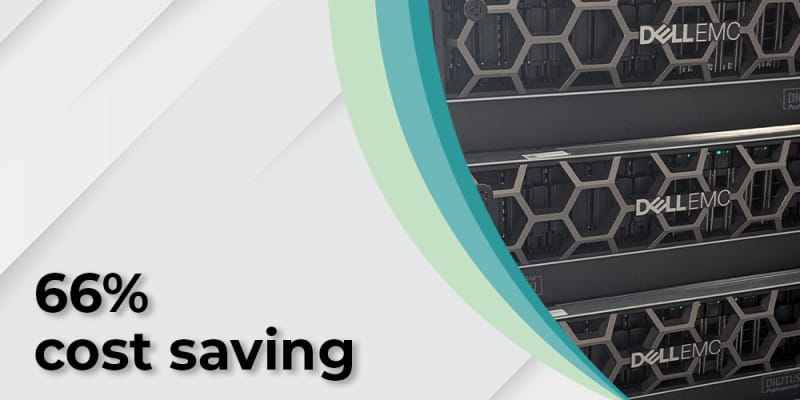
66% cheaper – and still no compromises
The team chose refurbished Dell servers from IT-Planet – not just because of the price. Behind this decision is a smart strategy that combines three goals: cost efficiency, high availability, and sustainability.
“We have relied on Dell for years because we can also work on the systems ourselves,” explains Mr. Hennersdorf. “With the budget for new servers, a fully redundant cluster would not have been possible. The refurbished servers from IT-Planet make exactly that possible.” The approach: keeping additional spare devices on hand instead of relying on external solutions. With refurbished hardware, this is economically feasible.
The result: Modern IT at significantly lower costs
The project demonstrates that even with a limited budget, a powerful and future-proof IT infrastructure can be implemented – without compromising on availability or quality.
- 66% cost savings through the use of refurbished hardware
- Implementation of a fully functional, redundant Proxmox cluster
- High availability through pre-configured spare devices
- Fast recovery in case of failure (in some cases under one hour)
- Flexibility to build a second site
The chosen approach combines economic efficiency with technical reliability – and shows that modern IT does not necessarily require maximum investment.
A modern, stable IT infrastructure – at significantly reduced costs and with a clear perspective for future growth.
Status: April 2026
Would you also like to make your IT infrastructure more cost-efficient and powerful? Feel free to get in touch with us.
Contact